Friday, October 30, 2015

Brahma, Vishnu, Shiva

In Hindu tradition, cosmic change is represented by a trio of deities. Brahma is the first, the initial outpouring of the energy of the universe. He represents creative energy, life-force, growth. Vishnu is the maintainer. He represents all of the varied forms that the energy takes, all of the plants, animals, minerals, elements, and all of their interactions. Shiva is often conceived of (especially in the West) as the destroyer, but I think a better way to think of him is as the renewer. Yes his final dance is one of total destruction, but only to make way for a new start, to make room for Brahma to begin again, for the trio is cyclical.

In farming this cycle becomes apparent. By planting a seed we are unleashing the creativity and growth within it. Then comes the maintenance. This means transplanting, watering, adding compost, weeding, thinning, initiating interactions with other plants/organisms, the list goes on. And then comes the destruction. Harvesting a crop often means ending a life. But it’s not simply destructive. Whether you are cutting grass to feed to livestock, cutting and harvesting rice that will feed many people, or digging up a field to plant a new crop, the destruction gives way to renewal. Life goes on and the cycle continues.


Striking rice against stones to loosen the grain
Feeling particularly Shiva-esque

After cutting all of the rice, we tilled the terraces to make way for many new beds of crops

Fruit Tree Scavenger Hunt


Trees with edible fruit are a great have for a farm. They are perennial, meaning you only have to plant them once, and once they start giving fruit they will do so for many, many seasons. Compared to other crops, especially annual veggies, trees need less access to water and soil nutrients as well, so they are easier to manage. In addition to the fruit harvest, trees can serve many other functions as well, including reducing/diverting wind, providing shade to ground plants, and providing shelter to many beneficial organisms

Today I went around the farm to find all of the different fruit trees growing here. 

Amba (Guava)
The whole time I've been here it's been peak guava season, so I've been eating good...


Bogote (Grapefruit)

Aap (Mango) sapling


Kera (banana)
The fruit with the blossom below
Mewa (papaya) sapling

Suntula (orange)

The new kid: a tiny avocado sapling, not native to Nepal, but ideal for the climate

Friday, October 16, 2015

Here's a song I think is relevant


Rice Harvest

Like most other parts of Asia, rice is the staple in Nepal. Rice is central to the culture here. In Hindu practices, a meal is not considered a real meal unless there is rice. Even the way of asking if someone has eaten literally translates into, “Have you had rice?” (“bhat khani?”). Rice patties (dhaan) are found all over the country. They spread out into the horizon in the plains of Terai; green-gold patchworks are scattered across Kathmandu valley; devotees of the sacred grain carve terraces into mountain faces.

And now is one of the best times of the year: the rice plants have turned from green to gold, and now is time to harvest. Yesterday (meaning Wednesday) we started harvesting the rice, and today we finish. Harvesting rice is a team effort. Some of us are in the paddies cutting the long stalks and making bundles. The bundles are taken up from the muddy terraces by others. At the top, there are people who take the bundles and swing them against rocks laid out on a large plastic tarp to loosen the grain from the plant. The leftover plant material is collected to make hay to feed the buffalo, and the grain is collected to be processed at the end of the harvest. Processing consists of removing the husks from the individual pieces of rice, and then storing the finished grain. These two or three days of harvest will last the whole year.

After the harvest comes the celeration. Dashain, the biggest of the Nepali holidays, is the week-long celebration of the harvest and of family. All schools and public operations are closed for two weeks for the preparation and celebration of the holiday. It starts this year on the 19th. As it is the most important of all the festivals, I will be taking the week off to be with my family and to celebrate. I’ll be back on the farm and on the blog right after, but until then, bhijaya dasami (happy Dashain)!


Building with Bamboo

In case y’all didn’t believe me, here are a couple of the projects I’ve been working on with bamboo:

Where there was just earth, we built stairs

Steps and railings all made from bamboo, with some help from clay-rich mud

Here is a shelf I fixed up with bamboo, cut, split and sawed

Where the magic happens

Monday, October 12, 2015

Irrigation

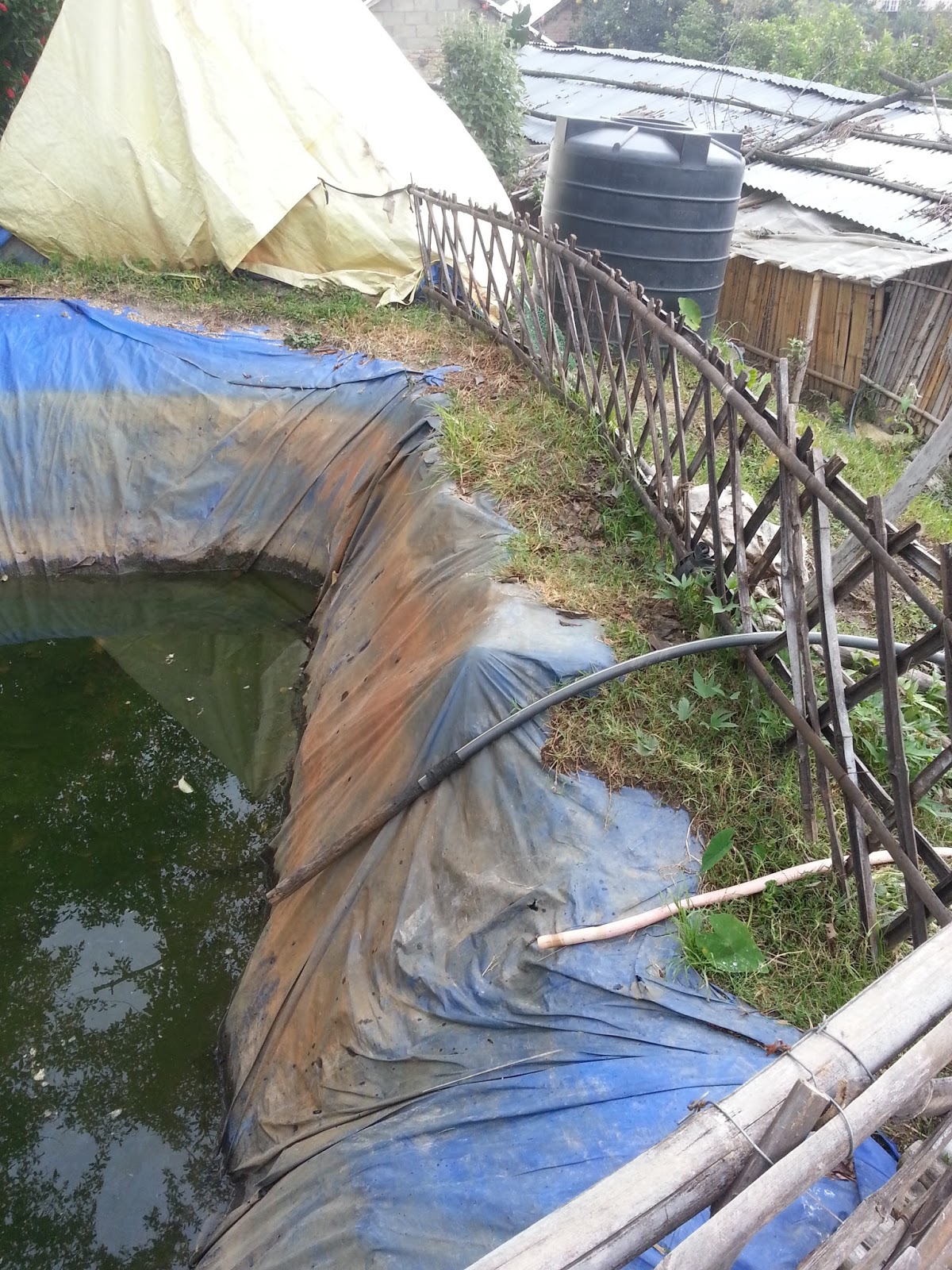
As with everything else on the farm, irrigation is done by hand. There are hoses which are connected to a central electric water pump, which pumps groundwater upwards. We water the plants in the evenings, because the daytime sun is so strong that surface water would very quickly evaporate. There is also a rainwater collection pond situated on an elevated part of the farm, with hoses coming down.


A lot of the plants on the farm are sheltered by plastic tarp. This is because during the rainy season (around June-August) it rains so much that many plants wouldn’t survive. So many of the crops (such as cauliflower, lettuce, tomatoes) are under cover and watered with collected rainwater at a more controlled rate. Other plants such as the rice and the asparagus gladly welcome the downpour.


Rainwater collection


Asparagus is a plant that wants a lot of water, or else the stalks will be too thin to go to the market. We dig ditches in between the beds and flood them and the water slowly permeates the beds

Make Your Bed

One of the many things I’m doing here on the farm is making and preparing beds for planting. For those who don’t know (though I think most of my readers do know/who even is reading this/is this too meta of a moment?), prepping a bed consists of first clearing the area of vegetation, whether that means clearing old crops or removing grass and weeds. We do this with hoe and then till the soil by hand. Compost is then added, and the soil is further mixed. Here the soil is especially difficult to till, because the almost perfect clay structures in the ancient tropical soil means that the soil aggregates are super strong (shout out Simkins!).

Beds that I dug around some old asparagus plants. In between the asparagus we planted bush beans (also peep the papaya sapling in the back)

A border bed for curry leaf transplants and later flowers

A close up of a transplant, which will one day grow into a 5-6 ft curry tree